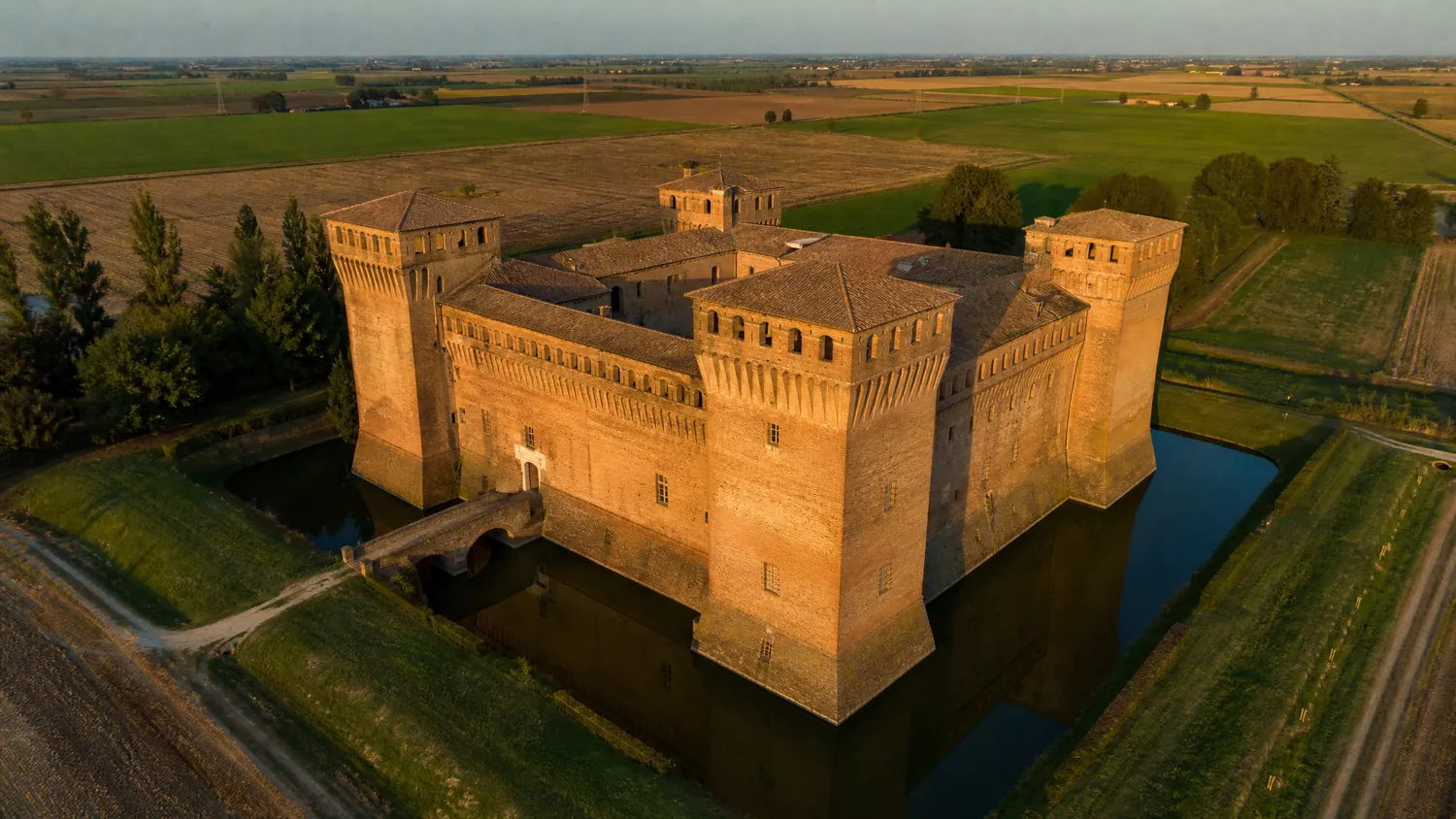
Booking choice: The private food and castle day, from $240 per person. Check dates Compare the options below
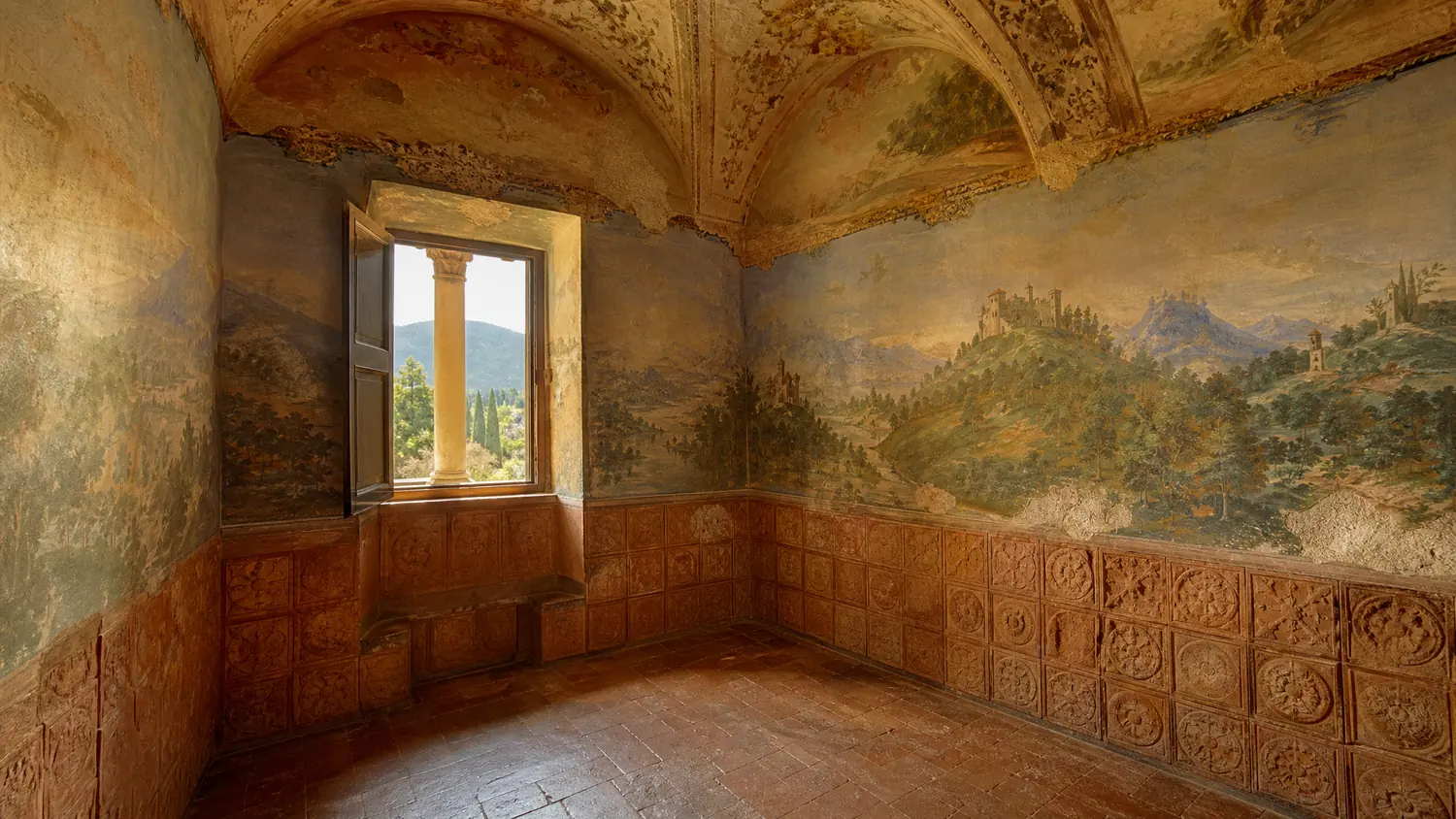
The Camera d'Oro, the Golden Room, is the heart of Torrechiara Castle: the bedchamber and study of Count Pier Maria II de' Rossi, painted around 1462. Its frescoes tell of his love for Bianca Pellegrini, and it is described as the only Renaissance fresco cycle in Italy that celebrates courtly love between real historical people.
Below: what the room is, why it is called golden, who the lovers were, what the frescoes show, who painted them, the ghost legend, and how to see the room with or without a guide. Facts come from Italian and English Wikipedia and the Pilotta's pages.
The quick answer
The Camera d'Oro is Pier Maria Rossi's bedchamber on the first floor of the north-east tower, frescoed around 1462, probably by Benedetto Bembo. The ceiling shows Bianca Pellegrini travelling through the count's lands and castles in search of him; the walls are lined with terracotta tiles in relief that were once painted and covered in gold leaf, stripped around 1910. It is part of the standard EUR 8 visit.
What is the Camera d'Oro?
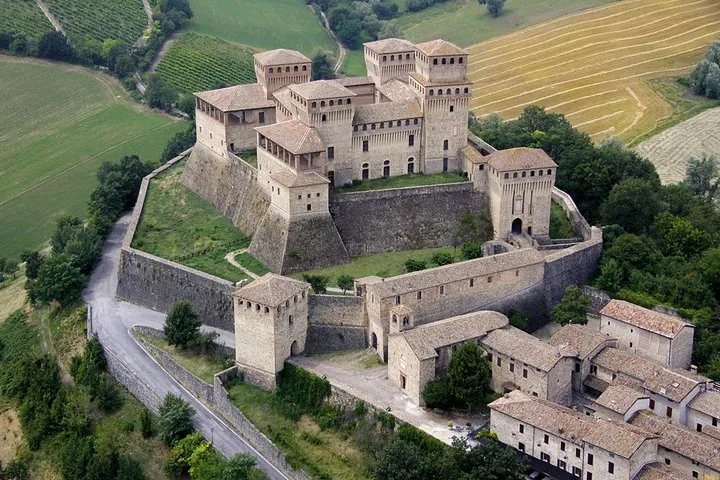
The private bedchamber and study of Pier Maria II de' Rossi, on the first floor of the tower that takes its name, the Torre della Camera d'Oro, in the north-east corner of the castle.
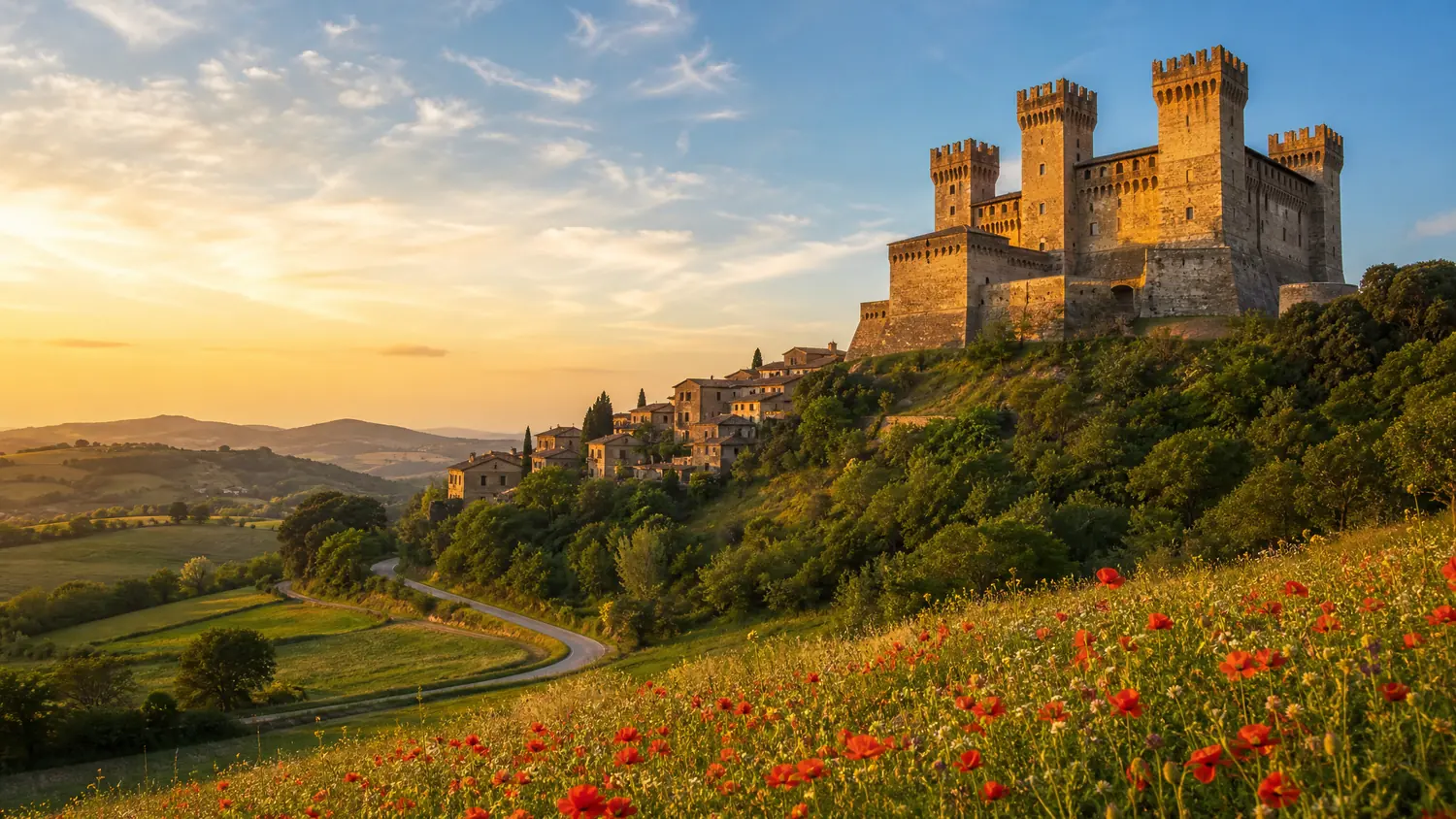
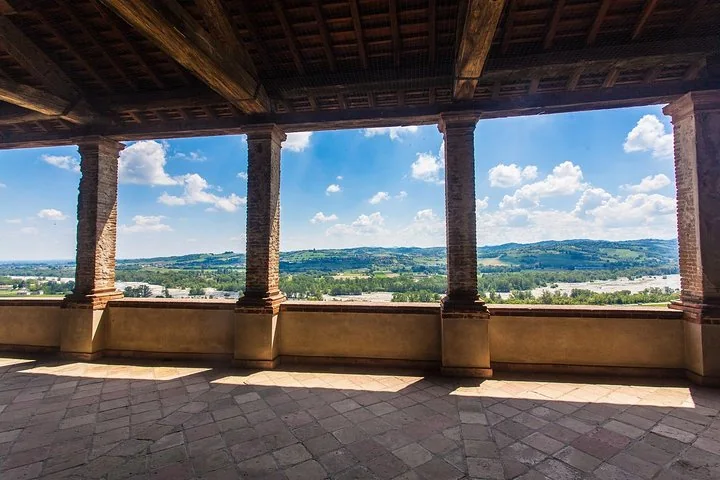
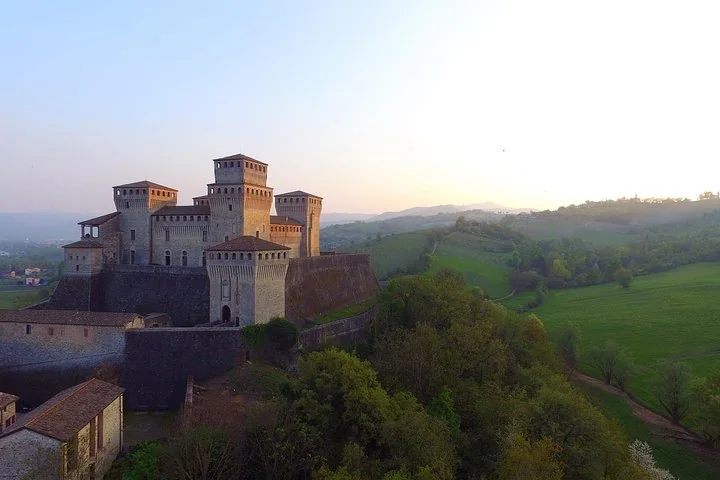
The count built Torrechiara between 1448 and 1460, as a fortress and as a home for Bianca Pellegrini. The room was painted around 1462, when the castle was new, and it opens onto a panoramic loggia. Of the castle's four corner towers, this is the one visitors remember.
Why is it called the Golden Room?
Because its terracotta wall tiles, modelled in relief, were once painted and covered in gold leaf. The gold was stripped around 1910.
The tiles run up the walls to the spring of the vault. In 1909 the castle was sold to a private buyer who stripped its furnishings, and in 1911 it was declared a national monument; the Italian State bought it in 1912. Today the tiles show the bare terracotta, and it takes a little imagination to see the room glowing as the count knew it.
Hear the story in English: the private day includes the castle ticket and a guide for your group only.
Check dates for the private food and castle dayWho were Pier Maria Rossi and Bianca Pellegrini?
Pier Maria II de' Rossi was Count of San Secondo, known as the Magnificent, a condottiero who fought for the Visconti and the Sforza. Bianca Pellegrini, from Arluno, was his lover for many years.
He built Torrechiara for her, and according to the official site of Roccabianca castle he also built that castle, in the plain near the Po, for his beloved Bianca in the mid-1400s. Their initials, intertwined, decorate the capitals of the eastern portico and the old nails of the door of the Oratory of San Nicomede. Pier Maria died on 1 September 1482. The lily of the Torre del Giglio is said to stand for Bianca, and the lion of the Torre del Leone for the Rossi.
What do the Camera d'Oro frescoes show?
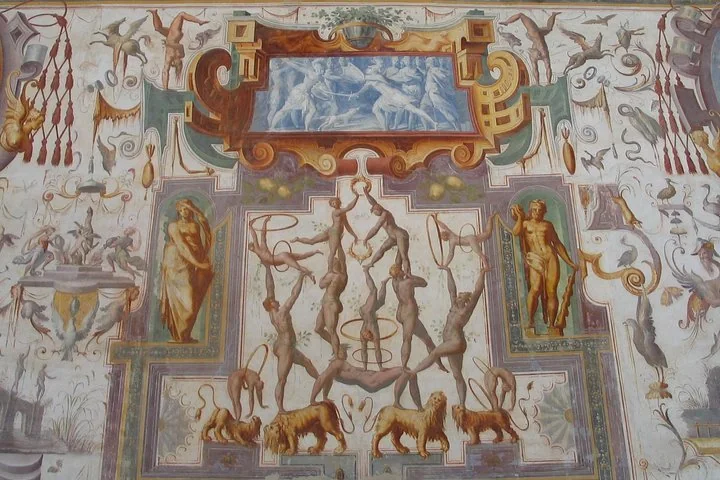
Bianca Pellegrini wandering through the count's lands in search of her lover, with realistic views of his many castles in the Parma area.
The ceiling is a map of the count's power as much as a love story: fortress after fortress, painted with enough care to be recognised. That mix of politics and passion is why the cycle is described as unique in Italy: a celebration of courtly love between two real people, not a myth or a saint's life. Look up for a long time, and let a guide point out the castles.
Who painted the Camera d'Oro?
Probably Benedetto Bembo, around 1462, though the attribution is debated: some scholars suggest Girolamo Bembo or Francesco Tacconi.
Benedetto Bembo also painted a polyptych in 1462 for the castle's Oratory of San Nicomede, below the Camera d'Oro. It is now in the Pinacoteca of the Castello Sforzesco in Milan, together with a 15th-century wooden tribune from the same chapel. The large painted halls elsewhere in the castle are later, from the late 16th century, by Cesare Baglione and his helpers.
What is the legend of Torrechiara?
Legend says the lovers were buried together under the Oratory of San Nicomede, and that on full-moon nights the count's ghost wanders the castle looking for Bianca, repeating the motto 'Nunc et semper', now and forever.
The oratory sits on the ground floor beneath the Camera d'Oro. The 2008 earthquake damaged it, and a restoration finished in 2014 rebuilt its collapsed 19th-century ceiling. No one has confirmed the burial. The story is part of why guides call Torrechiara a love nest.
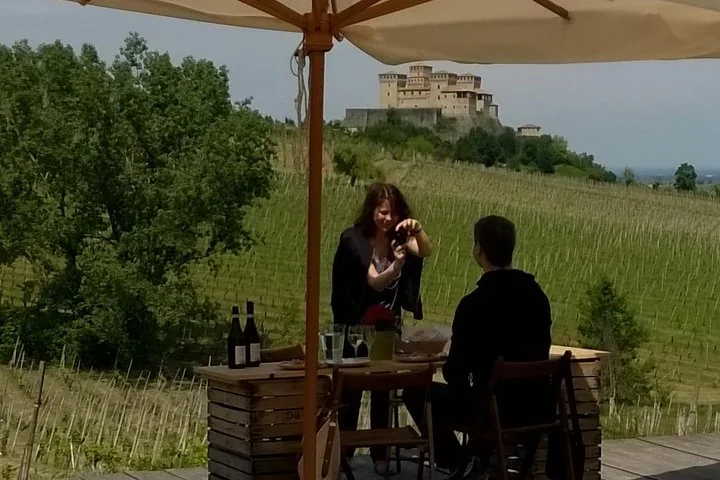
A private guide for the castle and its love story, then a tasting of three wines at a family winery. Non-refundable: no refunds or changes.
Explore the private castle and winery tourHow can you see the Camera d'Oro?
It is included in the standard EUR 8 visit, without a guide. For the story, book a guided visit: in Italian on GetYourGuide, or privately in English on Viator.
The guided castle visit ($26, 90 minutes, ticket extra) ends at the Camera d'Oro, which it calls the heart of the route. In English, the private food and castle day costs $240 per person, includes the ticket and is rated 5.0 from 10 reviews; one guest praised a guide who covered everything 'through the love story of Bianca Pellegrino'. Prices and hours are in our tickets and hours guide.
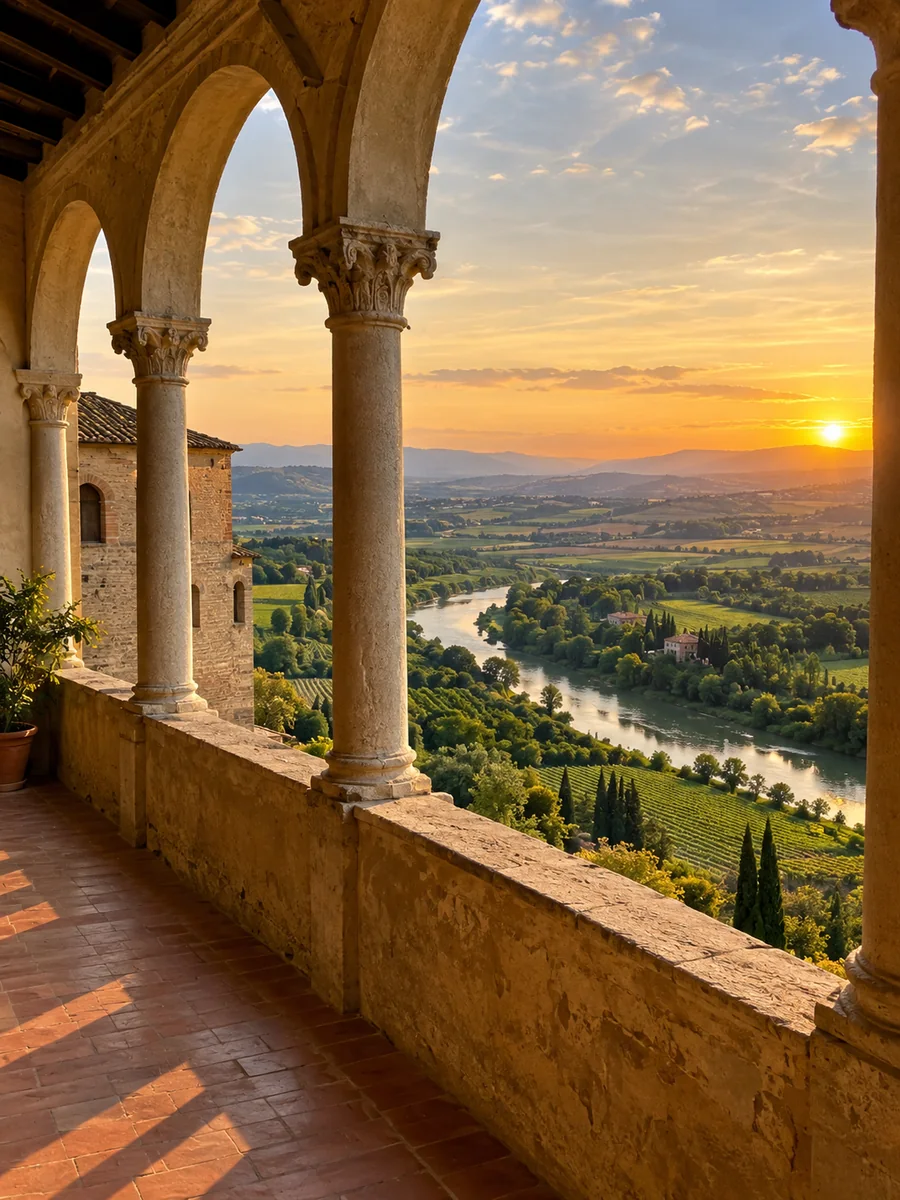
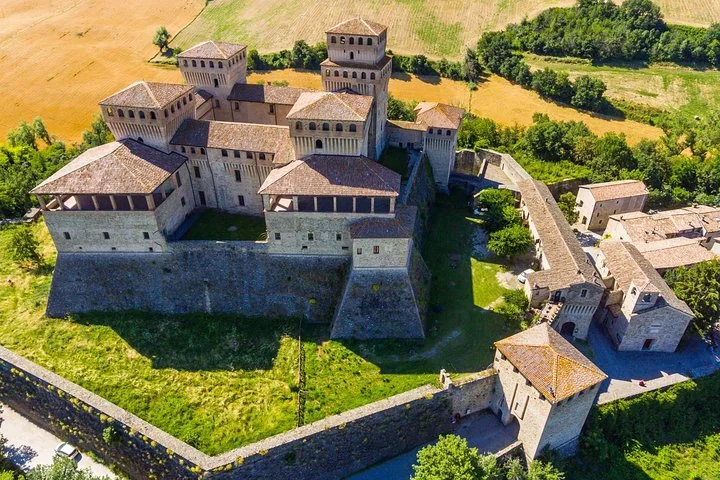
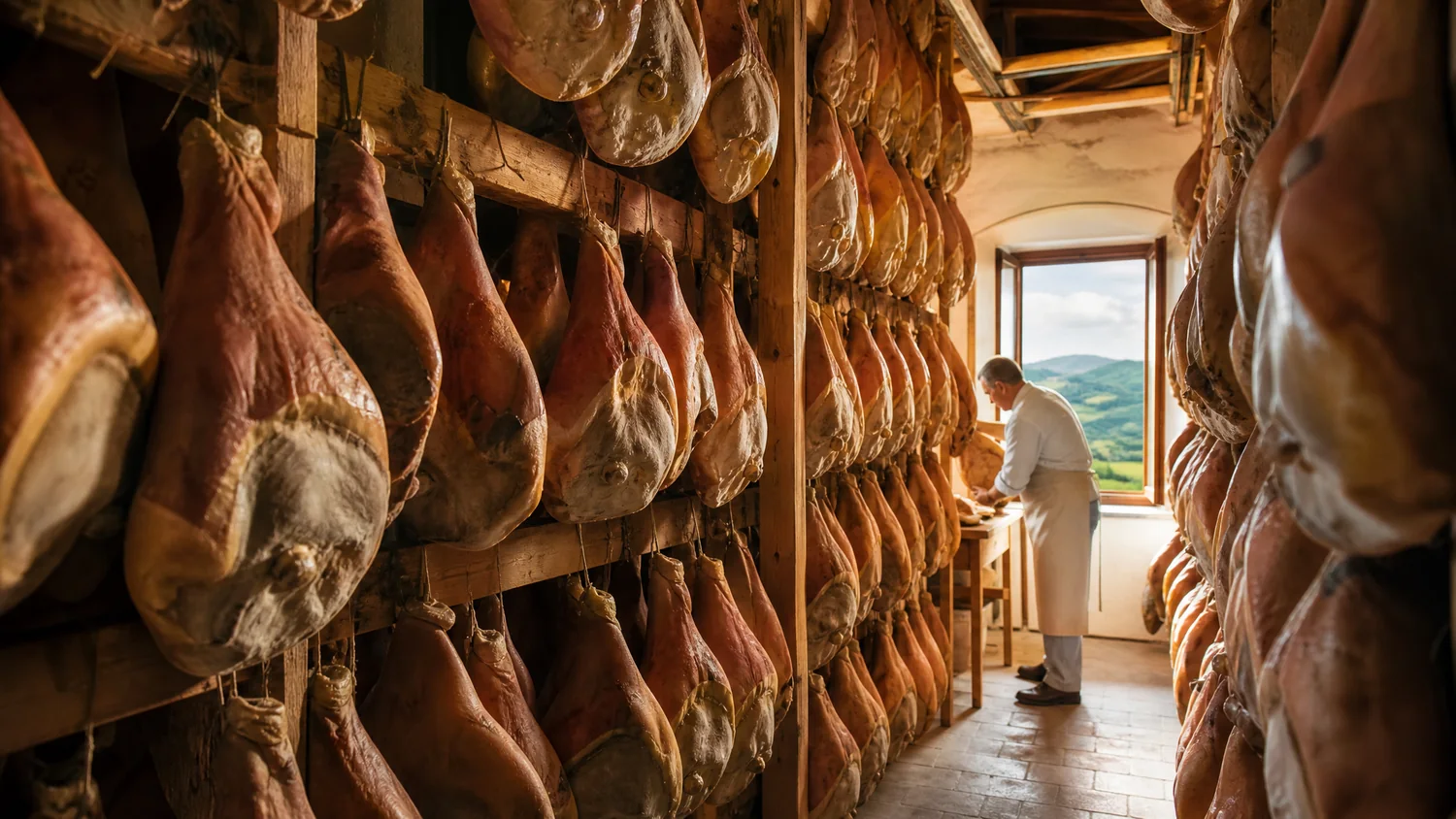
A private guide in English, a dairy and a ham maker with tastings, then the Camera d'Oro with the ticket included.
Explore the private food and castle dayWhere else can you follow the love story?
Inside the castle, at the Torre del Giglio and the oratory; outside it, at Roccabianca castle, built for Bianca, and at the Rossi castles of San Secondo and Felino.
Roccabianca's 15th-century frescoes of the story of Griselda, from Boccaccio's Decameron, were removed and taken to Milan; the castle now hosts events and a museum of distilling, so call before you go. The Rocca dei Rossi at San Secondo was the family seat. Hours and prices are in our guide to the castles near Parma.
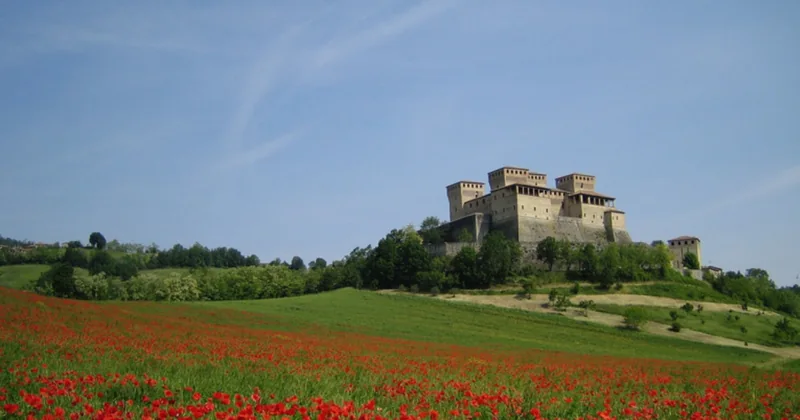
See the castle with the story told in Italian by a licensed guide, in 90 minutes.
Check dates for the guided castle visitFrequently asked questions
What is the Camera d'Oro in Torrechiara?
The Golden Room: Pier Maria Rossi's bedchamber, frescoed around 1462 with his love story with Bianca Pellegrini.
Why is it called the Golden Room?
Its terracotta relief tiles were once painted and covered in gold leaf, which was stripped around 1910.
Who painted the Camera d'Oro?
Probably Benedetto Bembo, around 1462; some scholars suggest Girolamo Bembo or Francesco Tacconi.
Is the Camera d'Oro included in the ticket?
Yes. It is part of the standard EUR 8 visit, with or without a guide.
Ready to book
Choose your visit
Free cancellation up to 24 hours before on every option. Prices are from-prices in USD and move with the season.
Parma Hills Food Tasting and Torrechiara Castle, Private
- Private guide for your group, in English or Italian
- Parmigiano Reggiano dairy and Prosciutto di Parma plant, with tastings of cheese aged 12 to 36 months
- Torrechiara Castle ticket and a glass of DOC Colli di Parma wine
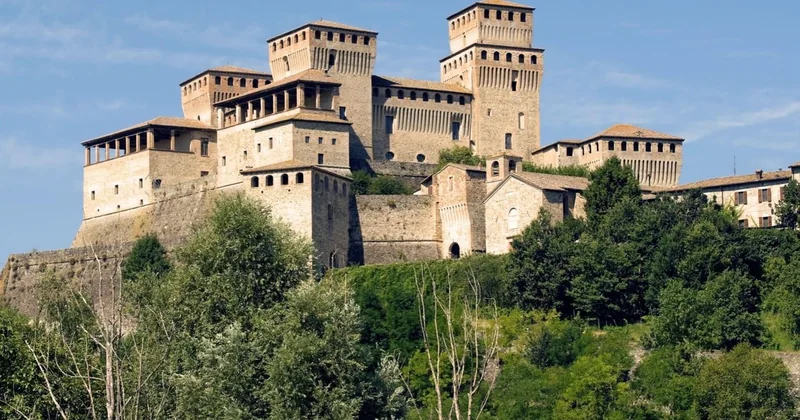
Torrechiara Castle: History, Love Nest and Legends
- 90-minute visit with a licensed local guide, in Italian
- The village, the Rossi family story and the Camera d'Oro
- Meet in front of the Church of San Lorenzo in the upper village